
Worked exampleExported from Calvance
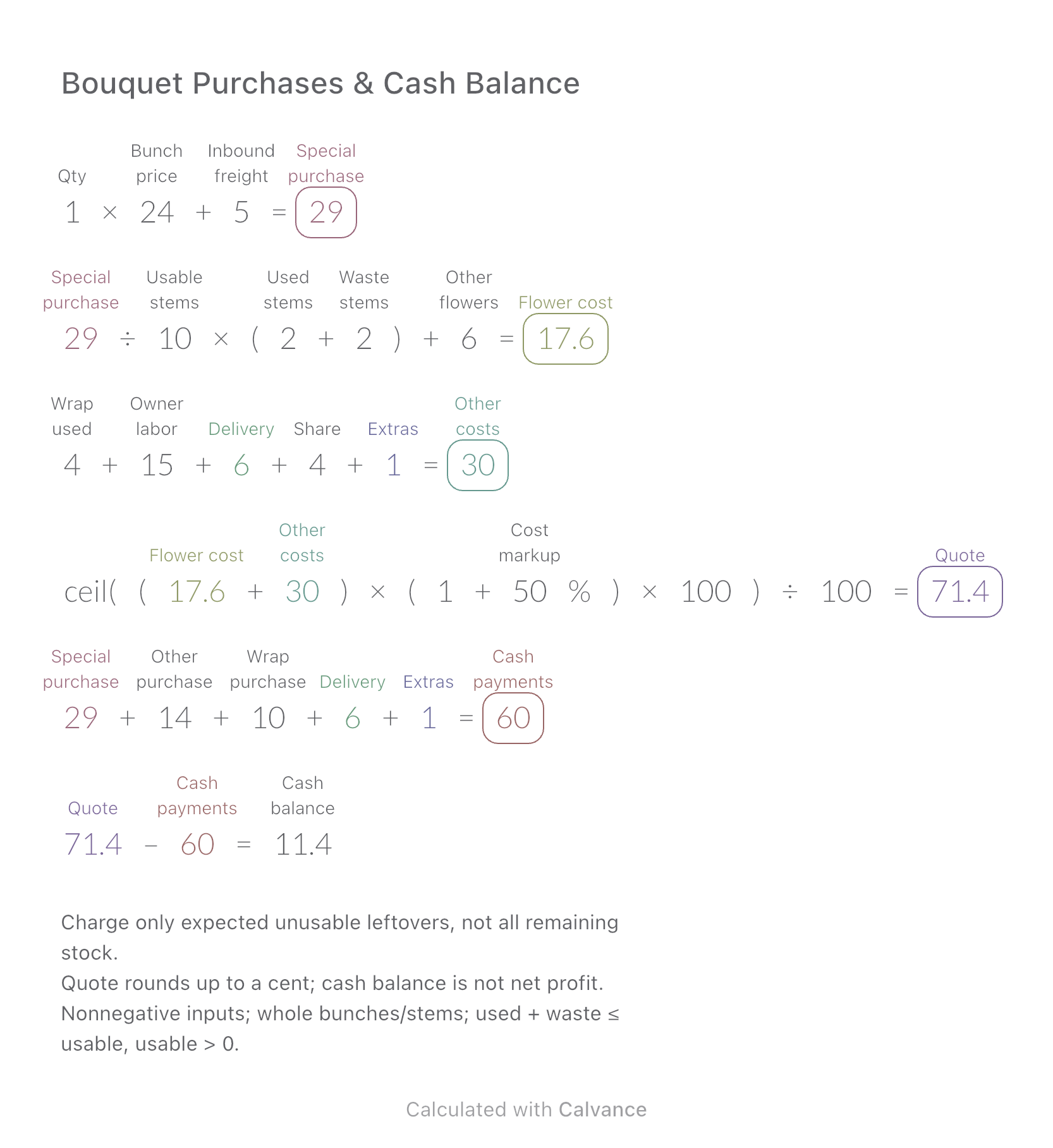
Bouquet Purchases & Cash Balance
Compare the cost of flowers used in one bouquet with the cash needed to buy whole bunches and packaging.
View template and methodCalculate how much of an order you must fund yourself and the minimum customer deposit needed before production.
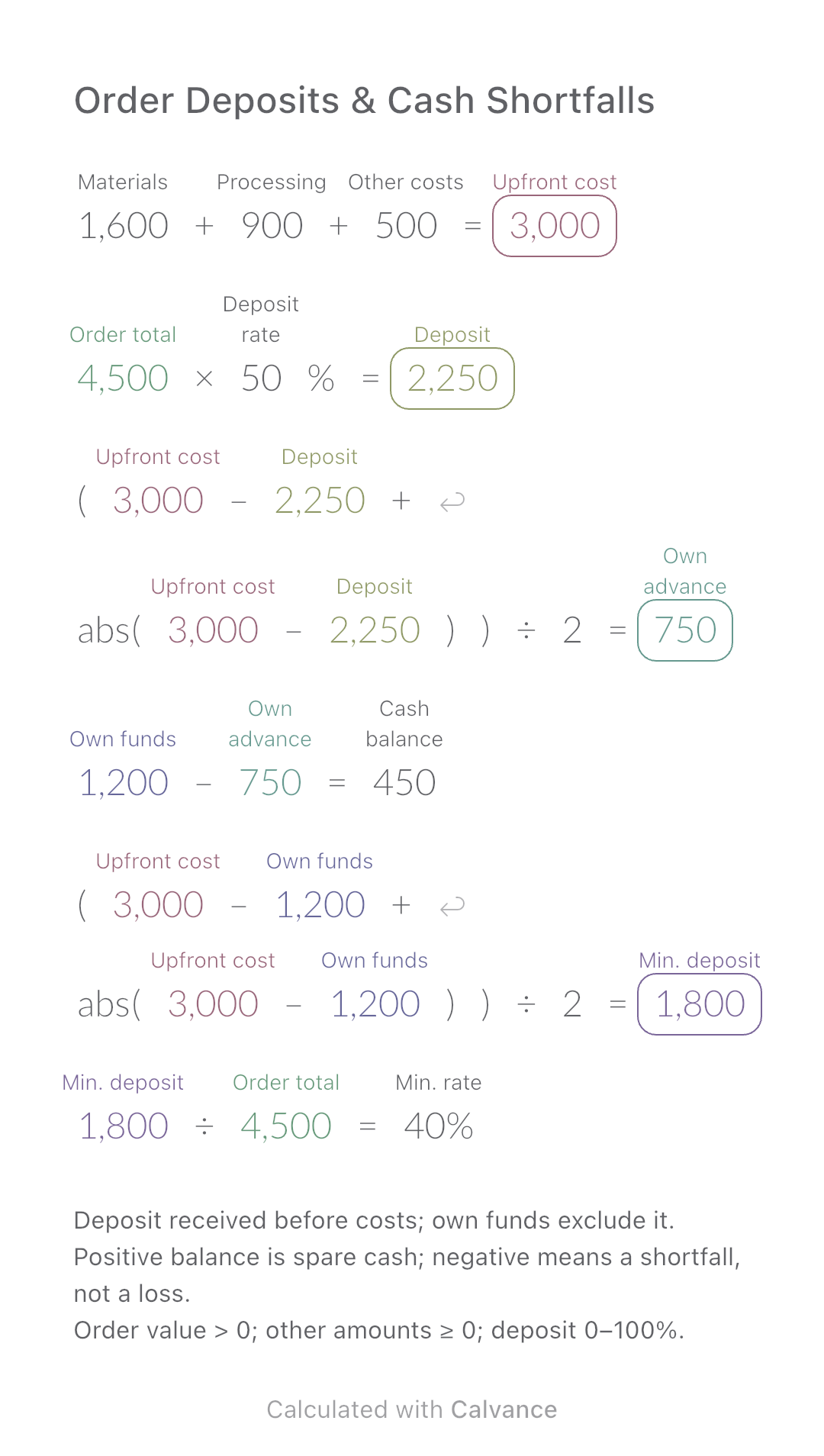
Exported by the iOS App After importing, edit the numbers in Calvance.
For a single order with costs due before delivery. The US example uses illustrative USD amounts, not market prices. The customer deposit must be received and available before these costs fall due; the balance is collected after delivery.
USD
| Inputs | Default |
|---|---|
| Materials | 1,600 |
| Processing | 900 |
| Other costs | 500 |
| Order total | 4,500 |
| Deposit rate (%) | 50 |
| Own funds | 1,200 |
Add materials, processing and other upfront expenses. The deposit equals the order total times its percentage. Your advance is the upfront cost less the deposit, floored at zero. Subtract this advance from available own funds. The minimum deposit is upfront costs less own funds, floored at zero; divide it by the order total for the minimum percentage. In the canvas, (x + abs(x)) / 2 keeps only a positive difference.
1,600 [Materials] + 900 [Processing] + 500 [Other costs] → Upfront cost
4,500 [Order total] × 50 [Deposit rate]% → Deposit
(Upfront cost - Deposit + abs(Upfront cost - Deposit)) / 2 → Own advance
1,200 [Own funds] - Own advance → Cash balance
(Upfront cost - Own funds + abs(Upfront cost - Own funds)) / 2 → Min. deposit
Min. deposit / Order total → Min. rate
Reduce only the deposit from 50% to 30%. The customer contributes less before delivery; your funding need rises. The minimum deposit stays unchanged because costs, order value and your own funds have not changed.
| Result | Default | Changed |
|---|---|---|
| Upfront cost | 3,000 | 3,000 |
| Deposit | 2,250 | 1,350 |
| Own advance | 750 | 1,650 |
| Cash balance | 450 | -450 |
| Min. deposit | 1,800 | 1,800 |
| Min. rate (%) | 40 | 40 |
Results are displayed to at most two decimal places; later formulas use unrounded values.
Own funds must exclude money already committed elsewhere. No progress payments, refunds or payment delays are modeled. The minimum rate can exceed 100%: even full advance payment would not cover costs with the funds specified. This is a cash timing check, not profit or credit-risk analysis.
Download and import into Calvance to edit the numbers. The canvas does not reject every invalid input; check the stated ranges.
Compare the cost of flowers used in one bouquet with the cash needed to buy whole bunches and packaging.
View template and method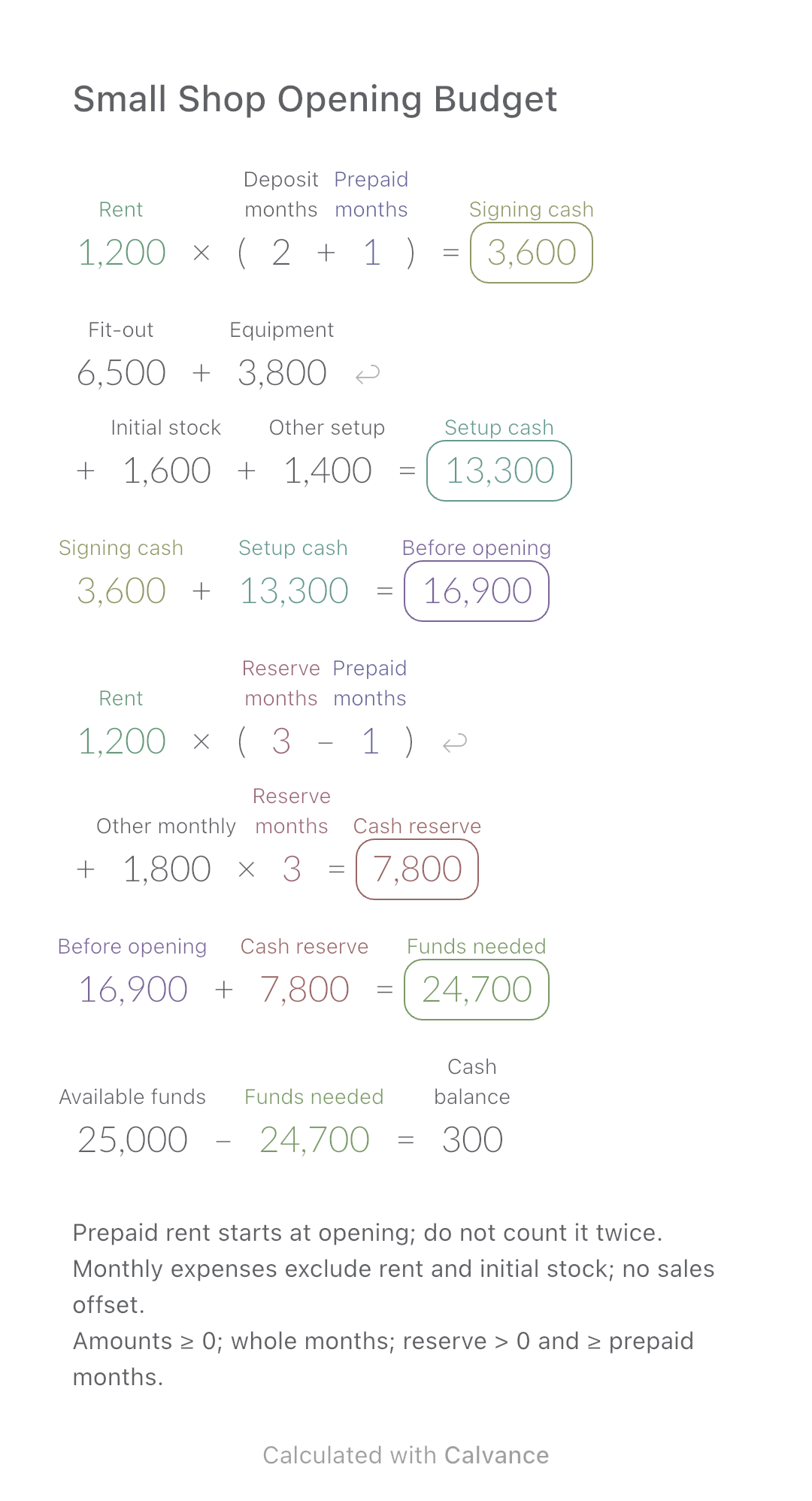
Add setup costs, rent deposit and a cash reserve to estimate the funds needed to open a small shop.
View template and method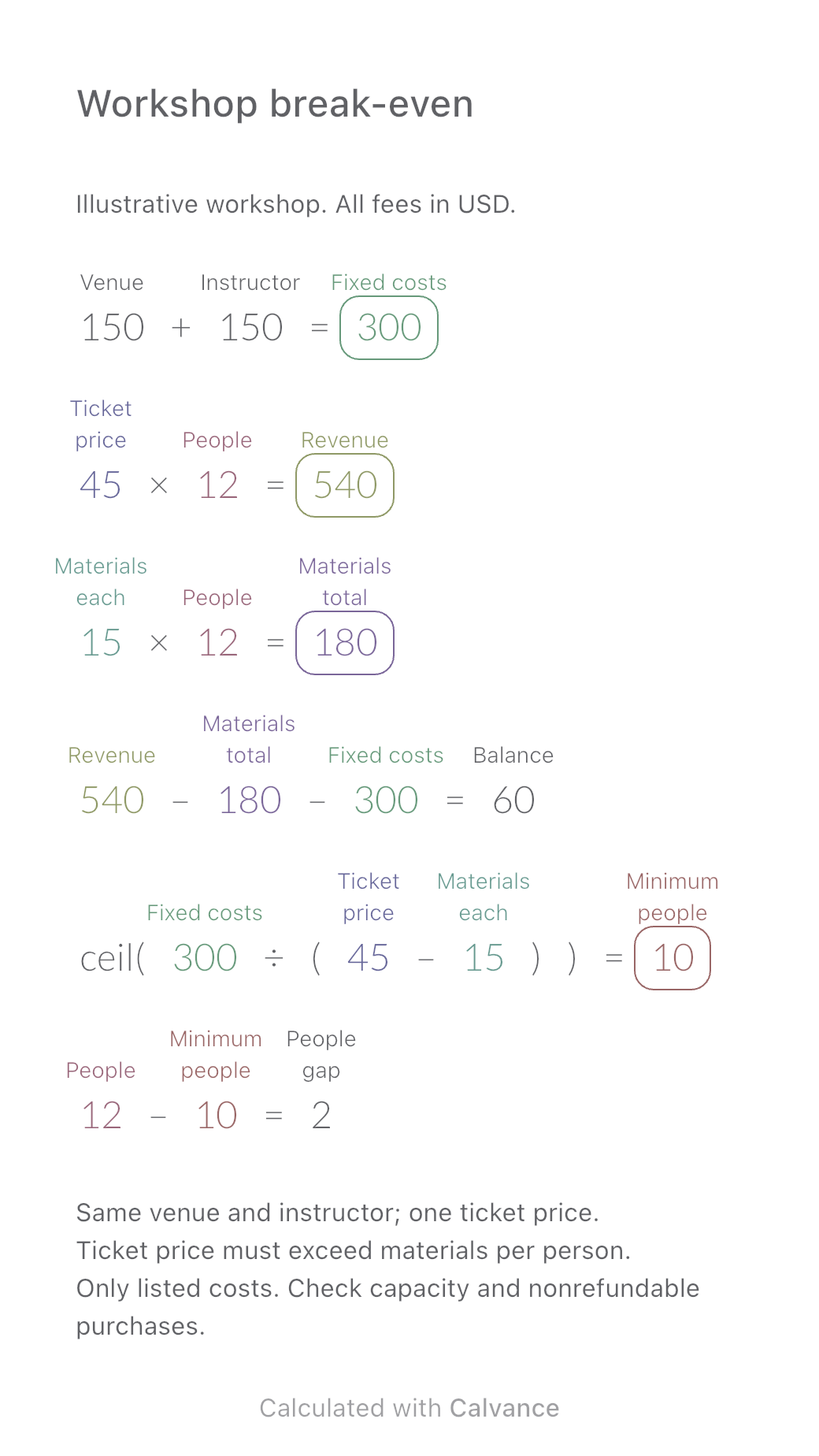
Work out how many paid participants cover a workshop’s costs. Compare revenue, materials and the balance at 8, 10 and 12 people, then download an editable Calvance template.
View template and methodChoose a plan when you need more canvases, high-resolution image exports, or sync across devices.